


The Moon Mystery Finally Solved

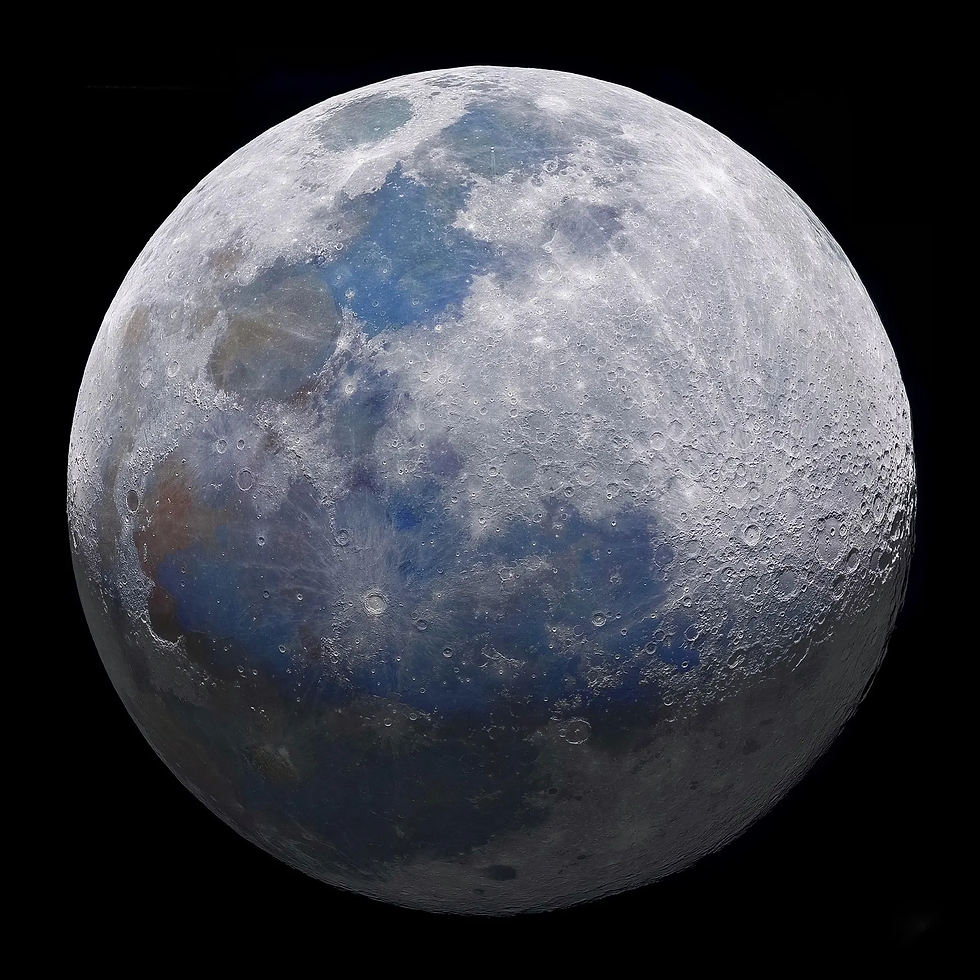
For more than 50 years, scientists have been puzzled by one question:Why do Moon rocks show signs of magnetism when the Moon has no strong magnetic field today?
Samples brought back during the historic Apollo Program revealed something strange—certain lunar rocks were magnetized, suggesting that the Moon once had a magnetic field strong enough to leave a lasting imprint.
But how could that be possible?
The Breakthrough Discovery
Recent studies in 2026 have finally provided a compelling answer:
The Moon likely experienced temporary magnetic fields
These were not constant like Earth’s magnetic field
Instead, they were triggered by intense events such as asteroid impacts or internal core activity
When massive impacts struck the Moon, they may have:
Generated short-lived magnetic dynamos
Stirred the Moon’s interior
Created bursts of magnetic energy strong enough to magnetize surface rocks
In simple terms:The Moon didn’t always have a magnetic field—but it had powerful “magnetic moments” in its past.
🌌 Why This Matters
This discovery reshapes how we understand the Moon:
It suggests the Moon was once more geologically active than we thought
It helps explain the evolution of planetary bodies
It improves how scientists interpret data from other moons and planets
🚀 Enter Artemis II: A New Era Of Discovery
While scientists are solving mysteries from the past, NASA is preparing for the future with Artemis II, the first crewed mission in the Artemis program.
Unlike the Apollo missions, Artemis II will:
Send astronauts around the Moon (not landing yet)
Test deep space systems for future missions
Lay the groundwork for long-term human presence on the Moon
👨🚀 What Makes Artemis II Historic?
First crewed lunar mission since 1972
First mission to carry astronauts using the Orion spacecraft in deep space
A major step toward returning humans to the Moon sustainably
🔬 New Discoveries And Goals From Artemis II
Although Artemis II is primarily a test mission, it is expected to contribute to several scientific advancements:
1. Better Mapping Of The Moon
Astronaut observations and onboard instruments will:
Capture high-resolution images
Provide new data on lunar terrain and composition
2. Studying Lunar Magnetism Further
With the newly solved magnetism mystery, Artemis II can:
Validate theories about temporary magnetic fields
Identify regions with unusual magnetic signatures
3. Deep Space Human Research
The mission will study how astronauts respond to:
Radiation exposure
Isolation in deep space
Long-duration missions beyond Earth orbit
This is crucial for future missions, including journeys to Mars.
Preparing For Lunar Bases
Artemis II is a stepping stone toward:
Permanent lunar habitats
Sustainable exploration
Scientific stations on the Moon
🌠 Connecting The Past And The Future
What makes 2026 truly exciting is this:
We are finally understanding the Moon’s past (magnetic mystery solved)
While simultaneously preparing to explore its future through Artemis II
This combination of discovery and exploration marks a new golden age of space science.
What This Means For Us
The Moon is no longer just a distant object in the night sky. It is:
A record of cosmic history
A testing ground for future space missions
A gateway to deeper space exploration
And with missions like Artemis II, we are closer than ever to unlocking its full story.


Comments